
Cave Environmental Monitoring System
Distributed measurement of temperature, humidity, CO₂ and airflow at multiple cave locations, connected to a server through fixed-IP Ethernet.
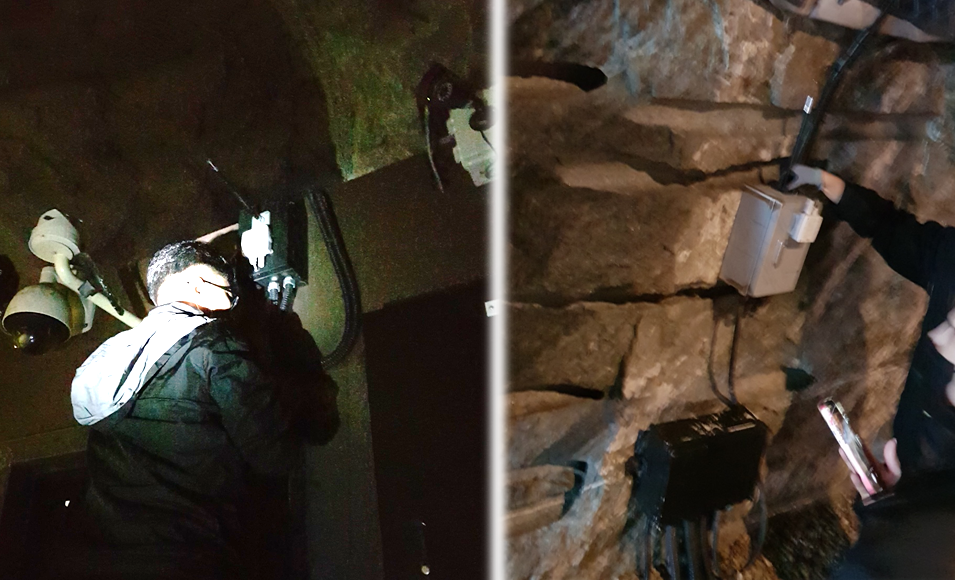
A field-ready network for a challenging underground site
The project required continuous environmental monitoring at six distributed cave locations. All points measured temperature, humidity and CO₂, while three also measured wind direction and speed using site-selected instruments.
Customer Challenge
- Monitor temperature, humidity and CO₂ at six cave locations.
- Add wind direction and wind speed at three of those locations.
- Connect every RTU through Ethernet using a fixed IP address.
- Reuse the selected HD52.3D147 wind instruments.
- Upload measurements automatically to the customer’s server.
PnP IoTs Solution
PnP IoTs surveyed the cave, adapted the wind-instrument interface, added 5 V to 24 V power conversion, assembled six complete RTU sets and verified every sensor channel before completing field installation and server-upload testing.
From field measurement to usable records
Hardware and communication architecture
| Item | Configuration | Role |
|---|---|---|
| RTU | PD-AMS-S8 × 6 | Collects sensor data and transfers it over Ethernet. |
| Temp / Humidity / CO₂ | FC0-TMHMCO2 × 6 | Measures cave air temperature, relative humidity and CO₂. |
| Wind Interface | SB0-HD523D147 × 3 | Connects HD52.3D147 wind instruments to the RTUs. |
| Power Conversion | 5 V → 24 V × 3 | Supplies the required voltage to wind instruments. |
| Communication | Fixed-IP Ethernet | Identifies each location and uploads data to the server. |
| PC Software | AutoSave | Automatically receives and stores monitoring data. |
Field installation and equipment
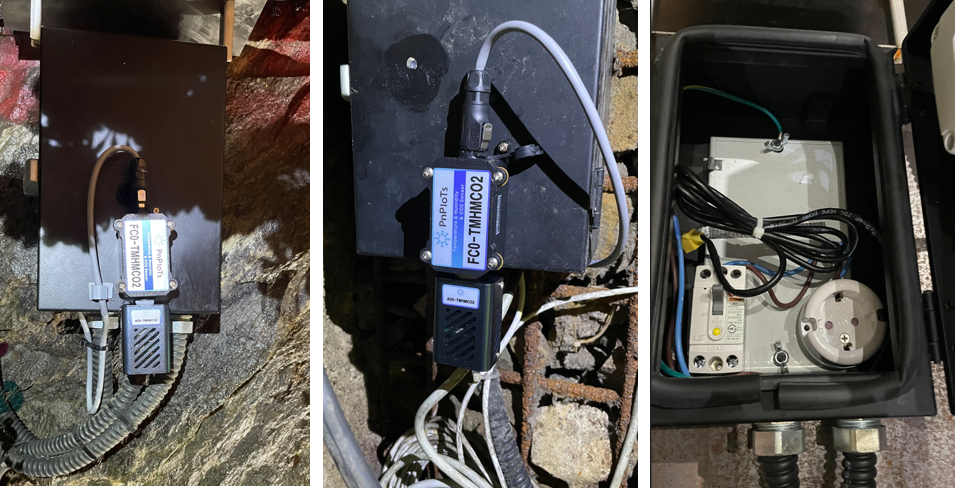
Office verification reduced field installation risk
All sensor channels were aged and checked before delivery, and six complete RTU sets were assembled in advance. Four technicians then completed installation in approximately six hours and confirmed correct server upload. The cave temperature was about 14–16°C during commissioning.
Monitor environmental conditions and airflow in one system.
Compare conditions at six locations instead of one reference point.
Fixed IP addresses simplify server integration and maintenance.
Integrate specialized or existing field instruments.
Replace manual measurements with stored trend data.
Products and technologies used
- PD-AMS-S8 RTU
- FC0-TMHMCO2
- SB0-HD523D147
- 5 V to 24 V Converter
- AutoSave
Source: Preparation and system verification · Field installation and commissioning
Monitor complex underground environments from one system
PnP IoTs combines distributed sensors, specialized instruments, RTUs, Ethernet communication and automatic storage for caves, tunnels, mines and enclosed facilities.